

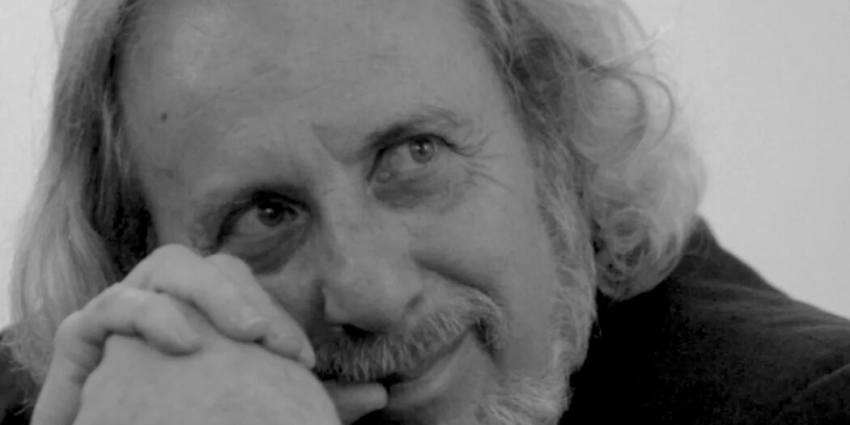
 Eduardo Mosches (David Moses). The key is always the memory of a door
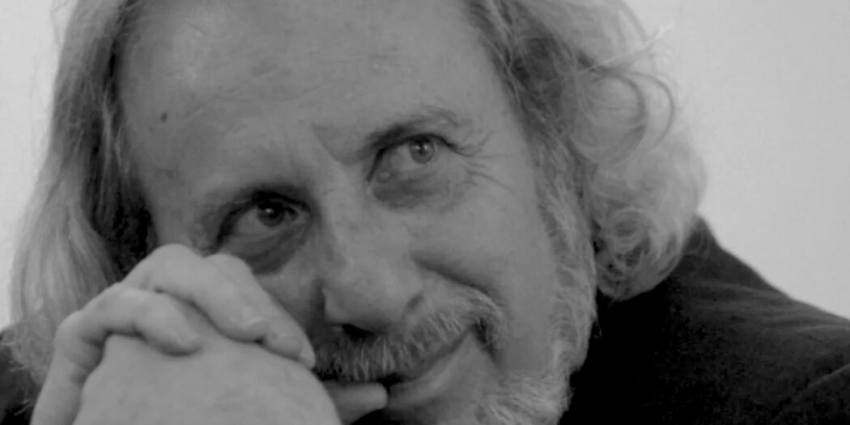
[This article was published in the Mexican Periódico de Poesía, March 2023. Mitchell Abidor translated it to English for the Matzpen site]
I would like to introduce the poetry collection by Eduardo Mosches (Buenos Aires, Argentina, 1944), Los tiempos mezquinos (Mean Times), using the dedications that appear at the beginning of the book as a starting point. On page 10, following the prologue by Sandra Lorenzano, there is a list of people to whom the author dedicates his poems. This list, together with the poems, sheds light on Eduardo’s life in my country—Palestine (which some call Israel)—during the time he resided there between 1963 and 1969. During this period, our paths coinicded geographically, though not chronologically, as this occurred two decades before I was born. The second time our paths coincided was during Eduardo’s time in Mexico, this one a lengthy period as it, too, began before I saw the light of day. However, here in Mexico, we have shared both time and space since I first met him nine years ago.
I speak of coincidences because it was thanks to them that the poet Mosches—a descendant of Yiddish-speaking Jews from Eastern Europe—was born, in the wake of pogroms and two world wars, as a Spanish speaker on the banks of the Río de la Plata. And it was another coincidence that I was born in that other land—on the shores of the Mediterranean—a land condemned to be both “holy” and the target of the Zionist colonization project, of which the young Eduardo was a part until, as he notes in his collection:
my healthy youthful nose
began to catch the scent of rot. (p. 14)
Let us look at the dedications at the beginning of the book, although without strictly adhering to the order in which they appear. Let us begin with Eduardo’s biological family:
To my father, who sowed roots of dissent.
To my sisters, who live in those lands.
In memory of my mother, who has remained—permanently—in Israel-Palestine. (p. 10)
Eduardo told me that he was born into this family in the neighborhood of La Floresta—”a neighborhood of the lower-middle class, mixed with working-class sectors, in the north of the city of Buenos Aires”—in a small house on Caxarville Street 1. “The lovely thing about that house,” he once told me, “was the patio, where I would spend hours reading in the warmth of the sun about the adventures of the anti-colonial and anti-imperialist pirate Sandokan. At my side was Chiquita, a German Shepherd who was very warm, affectionate, and, quite large, I might add.” At the age of 13, the family moved to the San Telmo neighborhood, into a second-floor apartment on Chile Street that his father—a journalist, athlete, union leader, and, as he described him, “a very vital guy” — had bought and then promptly sold. For his father, he also noted, “had had a tendency to get involved in business ventures that would always go wrong.” It was there, at age 13, that the permanent migration began, from neighborhood to neighborhood, from school to school, until, in 1963—at the age of 19—he migrated with his family from one sea to another:
I set sail from the country with wide streets—
the widest in the world—
of long, Sunday lunches
[…] only to land in another port. (p. 14)
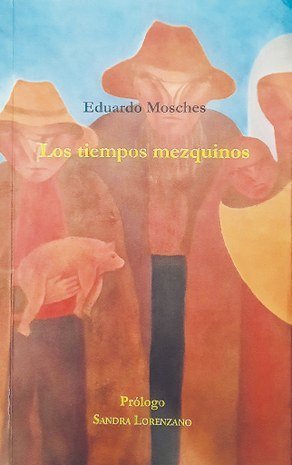 Eduardo Mosches’ book cover
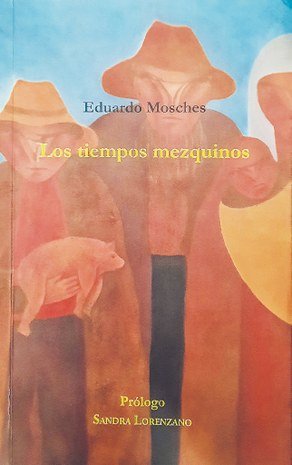
The port where the ship docked two weeks after setting sail from Buenos Aires was that of my own city, Haifa, in Palestine, on the eastern shore of the Mediterranean. In this city, twenty years before the arrival of the Mosches from Argentina, Zionist armed forces—acting in coordination with their British patrons—had expelled the native community of Palestinian Christians and Muslims to make room for the Jewish settlers arriving from all over the world. On March 17, 1948, Zionist forces drove the Palestinians of Haifa toward the port, where ships awaited them to transport them to the city of Akka—on the other side of the Gulf of Haifa—and, from there, into exile in Lebanon. My mother’s family—my grandfather, grandmother, and two uncles—couldn’t find any room on the ships, and so survived the ethnic cleansing operation. By the time Eduardo and his family arrived in 1963, my mother’s family was already living in the Arab ghetto of Haifa, known as Wadi Nisnas, where the Palestinian population that had survived the Nakba was concentrated by the nascent State of Israel.
Regarding the sea voyage from Buenos Aires to Haifa, Eduardo remarks: “I did not suffer from excessive seasickness, despite the rocking and swaying the ship was undergoing—and we along with it.” Upon crossing the equator, a carnival-like celebration was organized on the high seas, during which Eduardo dressed up as Jesus of Nazareth: “It was simple,” he said: “a sheet draped across my body, a few lacerations drawn on my face, and nothing else.”
Why did they decide to migrate from Argentina—the country with the widest avenue in the world—to Palestine, to Israel? There were many reasons: myth-making, indoctrination, and antisemitism. As Eduardo told me: “At school, I never stopped hearing ‘you fucking Jew’ whenever conflicts arose.” But the most significant factor for him was the utopian element. “I’m going to a place,” Eduardo told me he thought before boarding the ship, “where people don’t think about money, but about collective labor; where there is equality for all.” He was utterly oblivious to the colonial reality that the State of Israel—and Jewish migration—represented for the Palestinian people living in the region.
After navigating the immigration formalities regarding a Jew’s spurious “return” to his “Promised Land”—and completing the customary training courses in manual labor and the Hebrew language—Eduardo (or rather, David Moses, the name the author assumed during his time in Palestine) was assigned to a kibbutz (or “socialist commune” in Zionist euphemistic parlance) named Magal. Built in 1953, Kibbutz Magal occupied lands that had previously belonged to a Palestinian village called Raml Zeita—one of the 500 villages destroyed and razed to the ground by Zionist forces in 1948. Nevertheless, and quite swiftly,
It was difficult to crack the shell
of appearances.The rhetoric of return and equality—
the socialist image of the kibbutz—
crumbled in sorrow
the moment
a simple, observant gaze
brushed against the white Arab village. (p. 14)[…]
My brothers have let me down. (p. 23)
This white Arab village bears the name Baqa Al-Gharibiyya. Located less than a kilometer from Kibbutz Magal, it is one of the few Palestinian villages that, also by sheer coincidence, survived the Zionist ethnic cleansing of 1948. For his urban getaways from the cramped confines of the kibbutz, where the work assigned to Eduardo consisted of being in charge of a chicken coop (or, as he describes it: “collecting the eggs, feeding the chickens, and, after a time, sending them to their deaths”) Eduardo would head to the Israeli city of Hadera (also built on expropriated Palestinian land) to catch a movie. Reflecting on those excursions, he remarks:
The bus I took would pass through the Palestinian town of Baqa al-Gharbiyya. From the bus, I could do no more than catch a fleeting glimpse of Baqa. And in that brief glimpse, I was struck by the living conditions there compared to those of the kibbutz and other communities inhabited by Israelis—such as Hadera and Netanya. From the bus, I observed a vast disparity in the infrastructure and the (profoundly dismal) living conditions. I began to ask myself questions: Why was there such a stark difference across such a short distance—barely twenty minutes away? What is going on here? What accounts for this brutal social divide?
To find answers, Eduardo made his way, in 1964, to the local branch of the Israeli Communist Party in the nearby city of Netanya (which, incidentally, was also built atop a Palestinian village destroyed in 1948—a village formerly known as Umm Khalid). Unlike the Zionist environment of the kibbutz, which was exclusively Jewish, Hebrew-speaking, and anti-Arab, the Israeli Communist Party was, at that time, the only space where both groups—Israelis and Palestinians—could organize side by side in a spirit of camaraderie, fighting against discrimination against Palestinians and striving toward the communist utopia. Within the party, Eduardo also had the opportunity to meet members of the Palestinian intelligentsia and engage with them as equals. One of the members of that intellectual circle was Samih al-Qasim (1939–2014), one of the most important Palestinian poets of the 20th century, to whom Eduardo dedicates Los tiempos mezquinos (Mean Times):
In memory of Samih al-Qasim, a poet with whom we drank alcohol and coffee, and shared moments of friendship. (p. 10)
Al-Qasim is the same poet whom Eduardo—56 years later—published in the issue titled “Palestine: Words in Dark Times” of Blanco Móvil, the journal our author has edited in Mexico since 1985:
I learned
over centuries
not to utter heresies;
today I scourge the gods
who dwelt in my heart—
the gods who sold out my people
in the 20th century. (p. 33, translator unknown)
For Eduardo, this ideological shift to the Communist Party entailed a move to another kibbutz: Yad Hana, which had also been built upon Palestinian lands expropriated by Zionism. The members of Yad Hana were militants of the Israeli Communist Party, and there Eduardo forged a bond of friendship and camaraderie with the now-renowned historian Shlomo Sand, author of three books controversial within Israeli intellectual and academic spheres: The Invention of the Jewish People (2008), The Invention of the Land of Israel (2012), and How I Stopped Being Jewish (2013).
Eduardo told me that during this new communist phase he, Shlomo, and one other comrade—Israel Wohlgelernter—formed a sort of “Three Musketeers”. “The three of us understood one another deeply. We would go out together, holding our afternoon hashish-smoking sessions. Together, we led a bucolic life, and together we sought to establish connections with Palestinian comrades who went further than the “Arab-Jewish brotherhood” called for by the Israeli Communist Party. Well, the Party only took us to visit a few Palestinian villages—a kind of political tourism—just to hang around for a while, in a kind of festive atmosphere, and then to head back to the kibbutz as if nothing had happened.”
There was one more break, one more move: the Three Musketeers (Eduardo, Shlomo, and Israel) broke with the Communist Party and the kibbutz, and went to live in the city of Tel Aviv—a city which, although it boasts of being the “first Hebrew city”—founded in the early 20th century on coastal lands purchased from an Arab landowner—was by 1966 already a sprawling metropolis that had swallowed up the surrounding Palestinian lands, including the Arab city of Jaffa. The most important modern Palestinian city of the first half of the 20th century had been reduced by Tel Aviv to a poor Arab quarter and gentrified by luxury apartments and homes for Israeli Jews, Europeans, and Americans. In Tel Aviv, Eduardo’s first roof over his head and his first job were located precisely in Jaffa. Regarding that experience, he told me:
“During my first few days, I lived in a large hall that contained about thirty beds. Palestinian workers who came from the villages to work in Tel Aviv and its environs would spend the night there. They were all construction workers, and with their help, I landed my first job in that same field.”
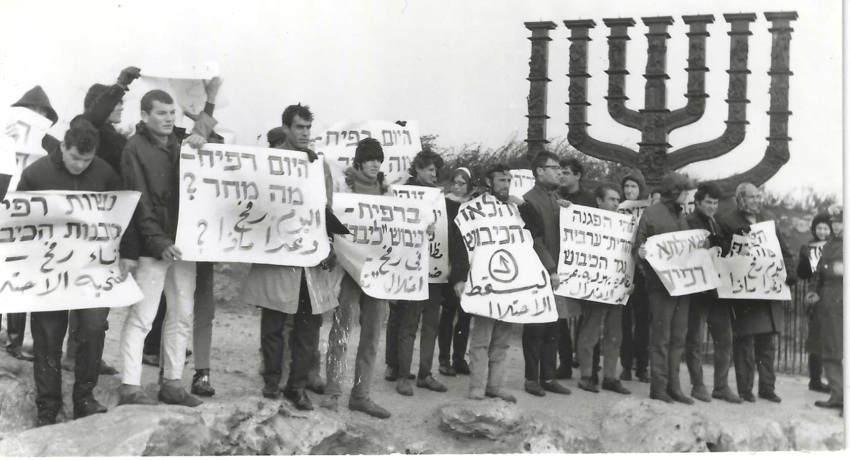
After a few weeks, with a more stable job secured, Eduardo moved into an apartment in a central part of Tel Aviv, close to the sea, sharing the flat with others—like himself— who were exiles from the Communist Party: active Trotskyist, Maoist, Guevarist, and New Left militants, grouped around the Socialist Organization in Israel. This organization was better known as Matzpen (which means “compass” in Hebrew), named after the newspaper that bore that name. Despite the many political factions within the organization, its ranks never numbered more than thirty militants—among them the three individuals who head the list of dedications in Los tiempos mezquinos:
To Lea Zemel, Attorney at Law …an Israeli advocate for Palestinian political prisoners.
To Michael Warschawski (Mikado), who, over the course of decades, has analyzed, reported on, challenged, and proposed alternative paths to Israeli colonial policy.
To Jabra Nicola, a Palestinian socialist whose ideas live on. (p. 10)
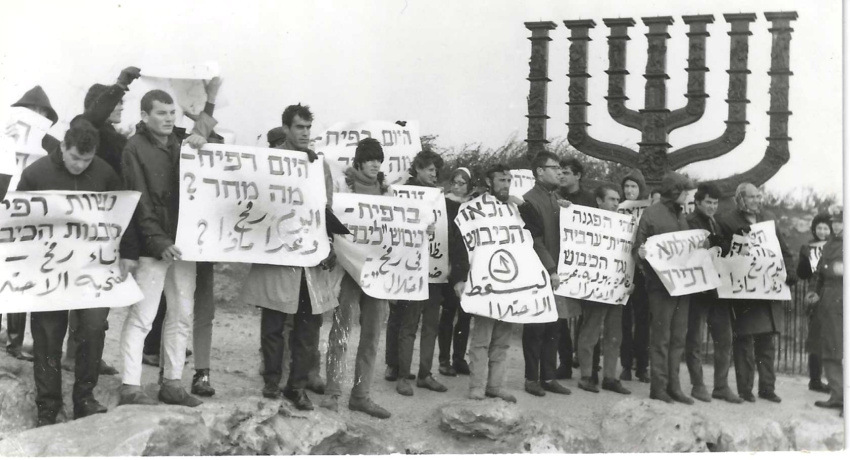 Eduardo-David (center of picture, holding a banner with a curved arrow on it) protests in Jerusalem against the occupation, January 28, 1969
Eduardo was active in Matzpen until his departure from Palestine in 1969, bound for Germany, Argentina, and, finally, Mexico. When I was born in Haifa, Eduardo was already in Mexico, while the Socialist Organization in Israel had ceased to exist several years earlier. Driven by questions similar to those Eduardo asked himself in his youth, I ended up joining the youth wing of the Communist Party, only to leave it later, without finding an organized political home, yet finding myself among former Matzpen members who had remained active, each from their own particular trench. I met Lea—who served as my lawyer and assisted me the first time I was summoned and interrogated by Israeli intelligence—and Mikado, who also happened to be my director when I worked at the Alternative Information Center in Jerusalem. I also encountered Jabra—the admired Palestinian socialist and third name on the dedication list of Los tiempos mezquinos—whom, regrettably, I never met in person. (Jabra Nicola died in exile in London in 1974.)
Furthermore, I met many other comrades and friends of Eduardo’s from his time in Palestine—such as Akiva Orr, Udi Adiv, and Haim Hanegbi—who became my mentors and friends, just as the Latin American comrade Eduardo Mosches would later become. It was on January 31, 2013, at the UNAM Faculty of Philosophy and Letters, that I finally met him. On that day, Eduardo was participating in a roundtable discussion titled “Semitisms—Antisemitisms?” “Gaza and Jerusalem,” alongside Enrique Dussel, Ramón Grosfoguel, and Silvana Rabinovich—a mutual friend whom I met that very day. It is to her, as well, that Eduardo dedicates his poetry collection:
To Silvana Rabinovich, with whom I have learned to think “Levinassianly.” (p. 10)
During that roundtable discussion, Eduardo’s contribution consisted of reading a political manifesto by Matzpen, dating from 1968, which articulated the necessity of decolonizing Israel and granting the repatriation of Palestinian refugees as the sole viable condition for Jews and Arabs in Palestine to live together in peace. Furthermore, the manifesto called for the creation of a socialist confederation encompassing all the peoples of the Middle East.
Since that day, the friendship between Eduardo and me has been like water flowing through many mills. Yet today, I find myself reflected in this book—not only in the updated dedication of this second edition of Los tiempos mezquinos, but also in its Poem VI, alongside the Jews of Toledo, Salonica, and Berlin. Thirty years ago, Eduardo wrote:
The key is always
the memory of a door.
To toy with one—or several—
is to hold between one’s fingers
a cup of coffee or tea
transformed
into conversations of repose.
Thousands of index fingers
point to milestones
in the quiet life
of so man
people gathered as family.
Almond sweets,
apple cake,
Mosaic precepts,
Quranic teachings—
sorrows held between the teeth;
the keys
that they lovingly keep
in camphor-scented drawers
or biscuit tins,
and which they bring out in the afternoons—
the Jews of Toledo,
Salonika, or Berlin,
alongside the Arabs
of Haifa, Tulkarm,
or all of Palestine.